
WiFi Can Identify People: Why Students Must Learn Privacy Beyond Cameras
WiFi Can Identify People: Why Students Must Learn Privacy Beyond Cameras
Future privacy is not only about covering cameras. Wireless signals, sensors, smart devices and AI analysis can also reveal information about people and spaces.
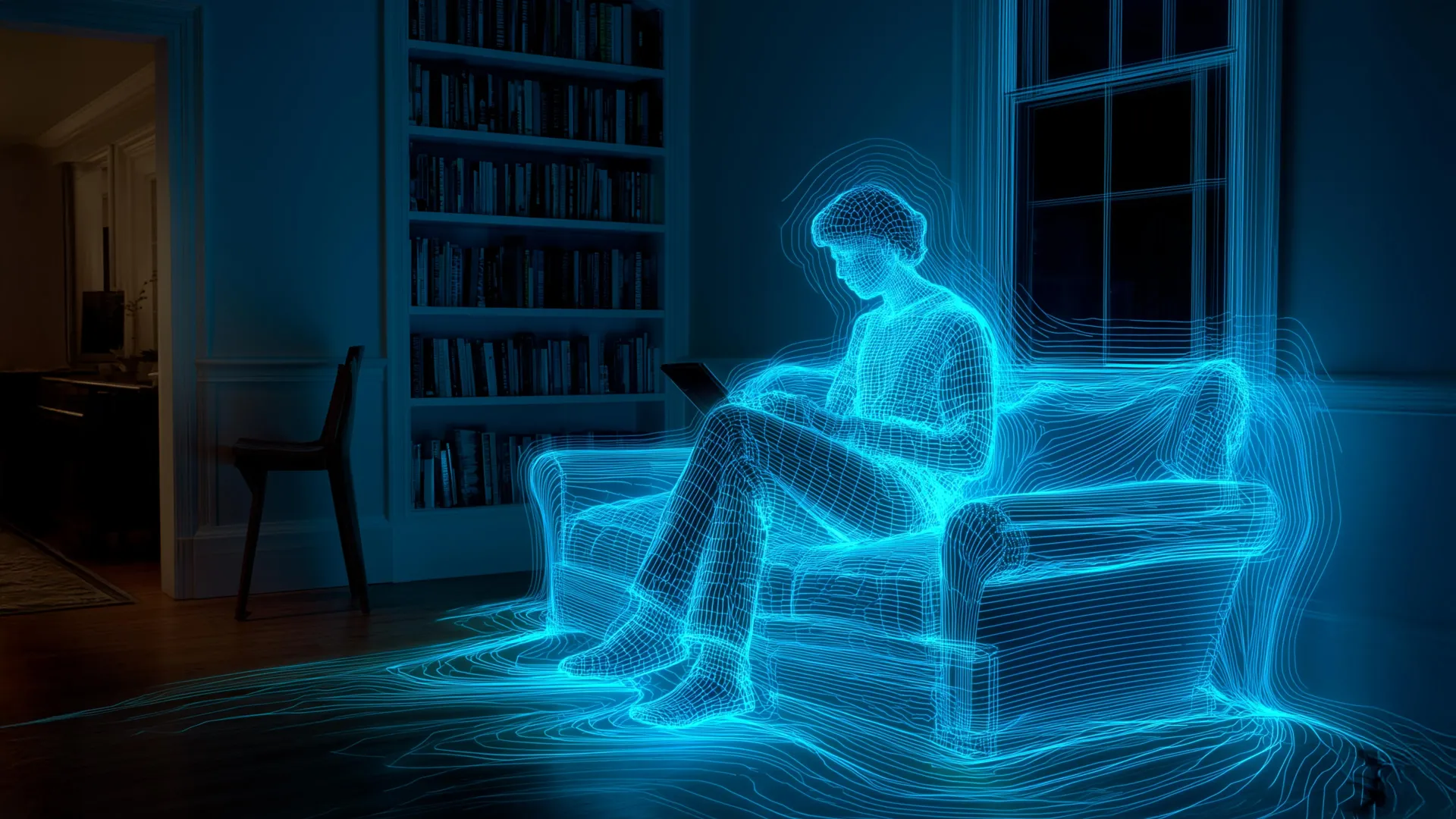
Researchers in Germany demonstrated that ordinary WiFi signals can be analyzed to identify people by studying how radio waves reflect around a room.
How can WiFi signals reveal information?
WiFi signals are radio waves. When these waves travel through a room, they bounce off walls, furniture and people. If a system studies how the signal changes, it may learn patterns about movement, presence or even identity.
This does not mean every home router is automatically spying on people. The important lesson is that ordinary technology can become powerful when combined with sensors, signal analysis and AI. That is why students should learn digital privacy beyond the usual camera and microphone warnings.
Privacy is becoming invisible
Many people understand camera privacy. They know a camera can record faces. But wireless privacy is harder to understand because we cannot see radio waves. A person may feel private in a room because no camera is visible, yet smart systems may still collect environmental data through WiFi, Bluetooth, sensors or IoT devices.
Old privacy thinking
- Look for cameras.
- Cover webcam when not used.
- Check microphone permissions.
- Be careful with social media posts.
- Lock your phone and laptop.
New privacy thinking
- Understand smart devices and sensors.
- Know what IoT devices collect.
- Secure WiFi routers properly.
- Read privacy settings for smart home tools.
- Learn how AI can analyze hidden patterns.
What students should learn from this topic
Important: This topic should be discussed for privacy education and safety awareness. Do not attempt to identify, track or monitor people without permission.
Basic WiFi and smart-home privacy checklist
These projects are safe and useful for Blogger, ICT, cybersecurity awareness, or school/university presentations.
How beginners can learn wireless privacy
Quick questions
Can normal WiFi really identify people?
Research demonstrations show that radio-wave patterns can reveal surprising information. But real-world use depends on equipment, setup, data, models and legal permissions.
Should I stop using WiFi?
No. WiFi is essential and useful. The lesson is to understand privacy risks, secure your router and be aware of smart-device data collection.
Is WiFi sensing always bad?
Not always. It could help in healthcare, elder care, safety monitoring or smart buildings. The problem is using it without consent, transparency or privacy protection.
What should students learn first?
Start with basic networking, router security, IoT privacy and ethical technology use.
Final thoughts
WiFi-based identification research shows that privacy is becoming more complex. In the past, people mainly worried about visible cameras. In the future, invisible signals and AI analysis may also become part of privacy discussions.
For students, this is a valuable learning topic because it connects networking, cybersecurity, AI, ethics, smart homes and digital rights. The best approach is not fear, but awareness: understand how technology works and use it responsibly.
Today’s Student Takeaway
Future privacy is not only about what cameras can see. It is also about what signals, sensors and AI systems can infer.
Topic sources: ScienceDaily report on WiFi-based identification research and current privacy discussions around wireless sensing, IoT and AI analysis. Thumbnail image source: Unsplash free image.
Join the conversation